We’re thrilled to have created this community that will be filled with creativity and inspiration. Once you have joined you’ll gain exclusive access to behind-the-scenes content, sneak peeks of upcoming artwork, discounts on prints and special insights into the unique painting process of Iris Grace.
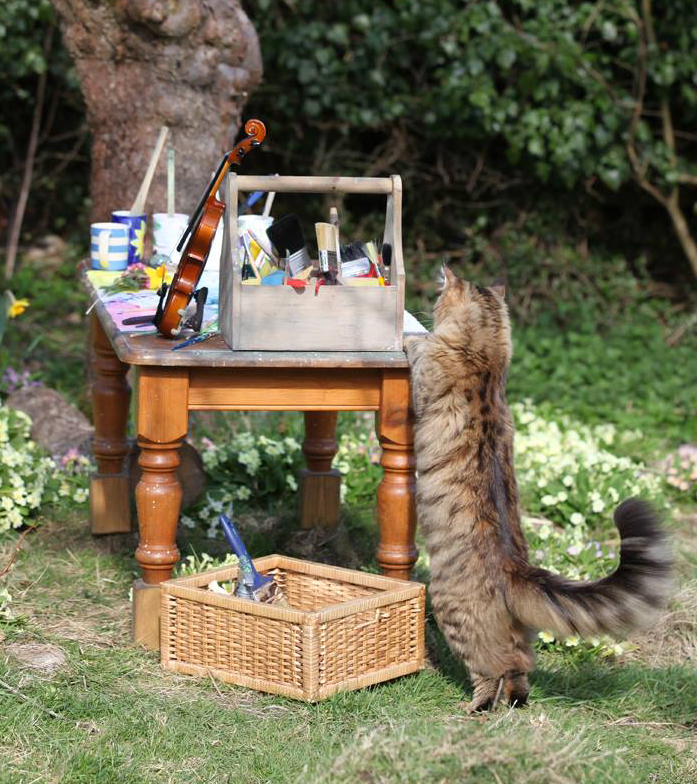
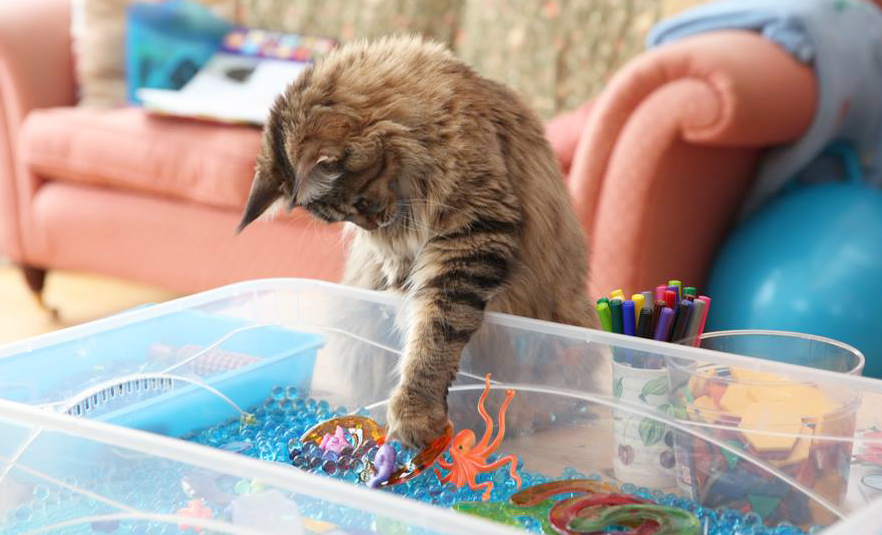
Along with pictures and videos of Thula and the other animals, life at home and our adventures.
What to Expect:
– Exclusive updates and previews of new artwork
– Community discussions and art challenges
– Share your own artwork with the community
– Techniques from Iris Grace
It is a safe space to introduce yourself, share your art, chat and ask any questions. We will celebrate the beauty of art together and the benefits of spending time with our animal friends.
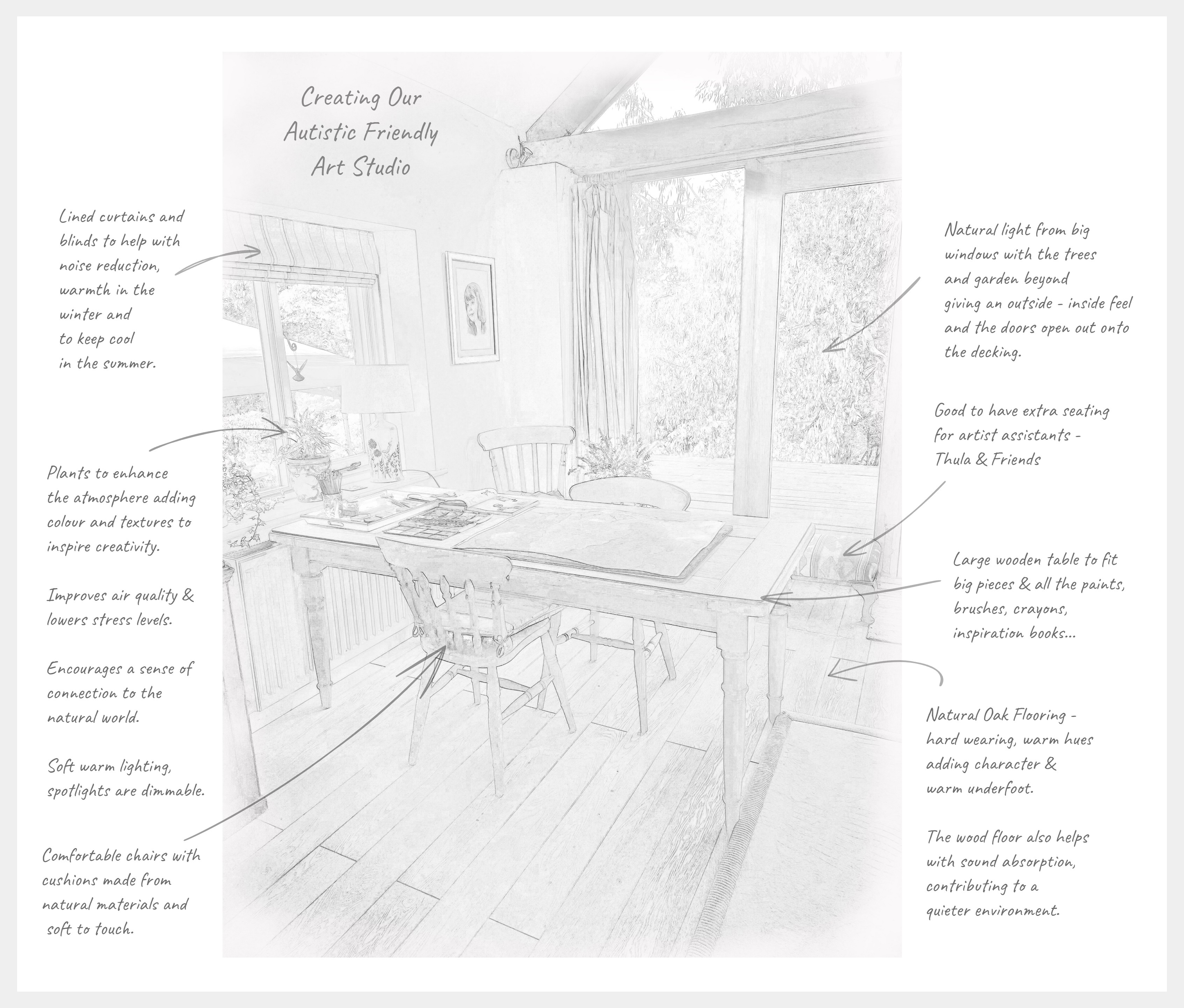
Lined curtains and blinds to help with noise reduction,
warmth in the winter and to keep cool in the summer. ☀️
Plants to enhance the atmosphere adding colour and textures to inspire creativity. 🪴
Improves air quality & lowers stress levels. 😊
Encourages a sense of connection to the natural world.
Soft warm lighting, spotlights are dimmable.
Comfortable chairs with cushions made from natural materials and soft to touch.
Natural light from big windows with the trees and garden beyond, giving an outside – inside feel and the doors open out onto the decking. 🌳
Good to have extra seating for artist assistants – Thula & Friends 🐈 🐇
Large wooden table to fit big pieces & all the paints, brushes, crayons, inspiration books… 📚🎨🖌️
Natural Oak Flooring – hard wearing, warm hues adding character & warm underfoot.
The wood floor also helps with sound absorption, contributing to a quieter environment.
What’s your ideal creative space?
Where do you feel the most comfortable? Before we start to work on our art let’s set up the environment we are working in to be the best it can be 😊 This is Iris’s but what will yours be like and what works for you now and why?
Let’s consider some points when setting up a creative space
1. Location:
– Accessibility: Choose a location that is easy to access regularly, whether it’s in your home or a rented space. Consider noise levels, especially if you’re easily distracted.
– Inspiration: Being close to nature or interesting urban environments can provide additional stimulation.
2. Layout:
– Zoning: Create areas for specific tasks—drawing, painting, mixed media, and digital art. Each zone can be tailored to the needs of that medium.
– Movement: Ensure that pathways are clear and allow for easy movement between different work areas.
3. Storage:
– Modular Solutions: Use modular shelving units that can be adjusted as your collection of materials grows.
– Visible Organization: Transparent bins or labeled storage can make it easier to find what you need quickly and encourages you to keep your space tidy.
4. Lighting:
– Task Lighting: Use adjustable desk lamps focused on work areas for detailed tasks, while softer ambient lighting can create a relaxed atmosphere. Make the most our of any natural light available.
– Color-Temperature: Select bulbs that mimic daylight (around 5000K) to ensure accurate color representation when working on art.
5. Work Surface:
– Material Choice: Opt for surfaces that can be easily cleaned.
– Height Consideration: Having adjustable height surfaces can help accommodate different projects, whether you’re standing or sitting.
6. Tools and Materials:
– Inventory System: Keep an inventory list of your materials to manage stock effectively, replacing items before they run out.
– Segregation: Separate basic supplies (brushes, paints, pencils) from specialty items to streamline your workflow.
7. Comfort:
– Chair Selection: Invest in chairs that you love, especially if you’re seated for long hours.
– Temperature Control: Have fans or heating available to maintain a comfortable working temperature year-round.
8. Inspiration:
– Vision Boards: Create mood boards or inspirational walls with colors, images, and quotes that resonate with your artistic style.
– Samples: Display your past works to motivate yourself and track your artistic journey.
9. Ventilation:
– Air Quality: Install exhaust fans or use air purifiers to maintain air quality, especially when working with solvents or sprays.
– Fresh Air: Whenever possible, open windows during work sessions to allow for natural ventilation.
10. Technology:
– Art Software: Consider investing in tablets or software for digital art, design, and planning.
– Documenting Progress: Use cameras or smartphones to document your work and share your process on social media.
11. Sound:
– Acoustic Treatments: If sound distraction is an issue, consider adding rugs and other soft furnishings to absorb the sound along with natural materials.
– Sound Control: Create playlists or find streaming services that provide the type of music or ambiance that inspires you while working.
12. Access to Nature:
– Natural Elements: Incorporate plants to enhance the atmosphere. Studies show that greenery can boost creativity and reduce stress.
– Outdoor Space: If possible, connect your studio to an outdoor area where you can work, drawing inspiration from your surroundings.
If we pay attention to these aspects, our art studios can become a sanctuary for creativity and an effective place for artistic exploration and productivity. Happy creating everyone !
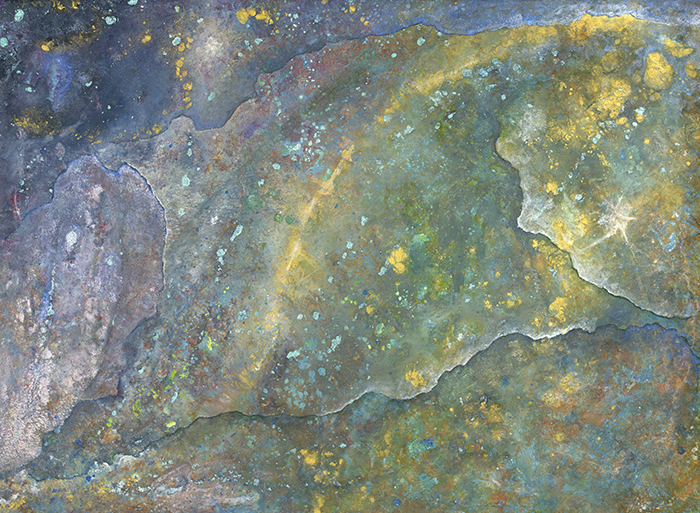
Iris’s latest painting ‘Journey Through The Dreamscape’ is available to order as a giclee print or the Original, please email Arabella at irisgracepainting@yahoo.com to find out more.
Print Size and Price
Prints are the same size as the Original: 55cm x 75cm (21.65 inches x 29.52 inches) – £170.00
Shipping
All print orders are shipped using tracked and signed delivery with Royal Mail.
For the United Kingdom we have a flat rate of £14.00 covering postage, packing and insurance.
For the Rest of the World we use the following rates to cover postage, packing and insurance:
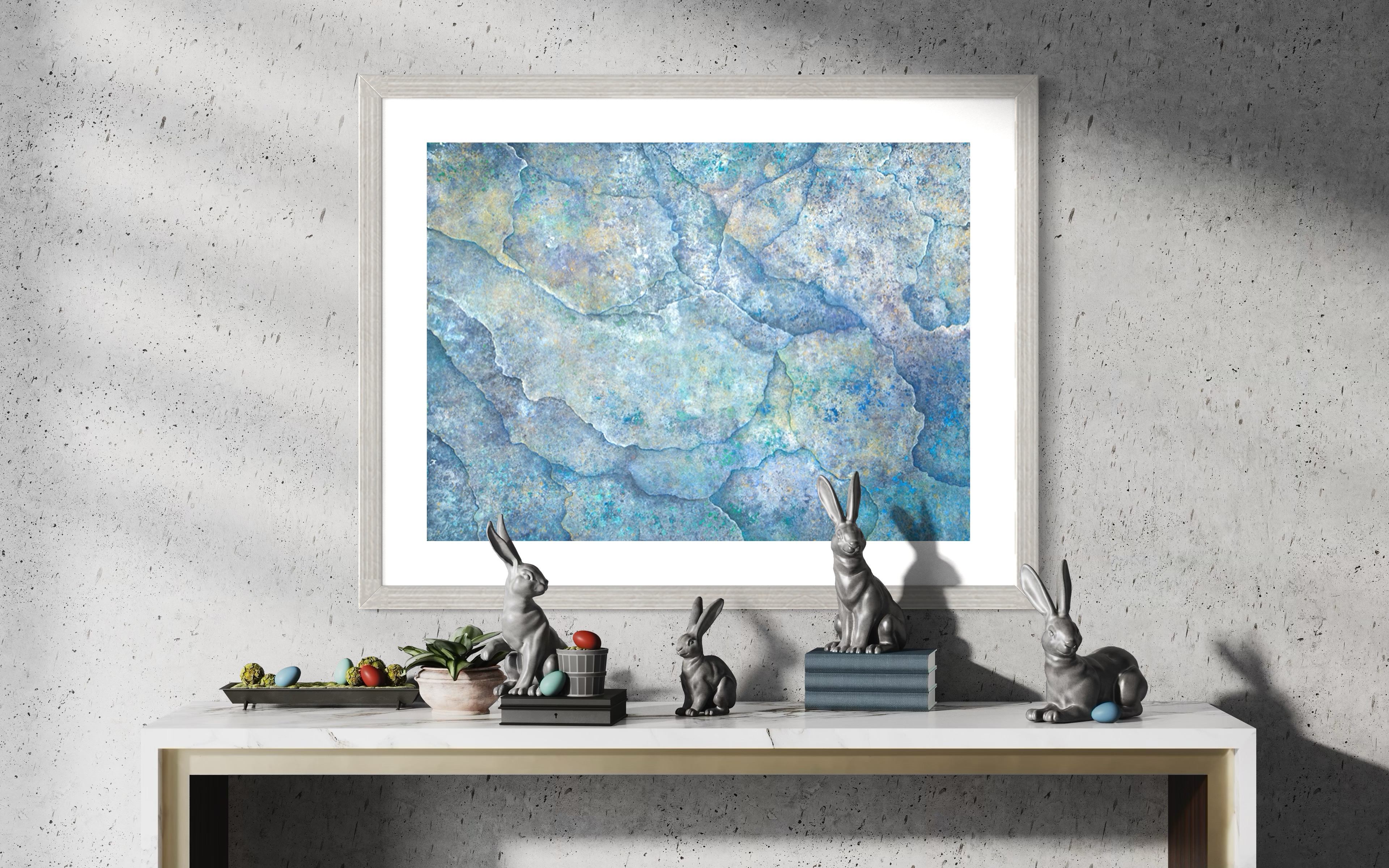
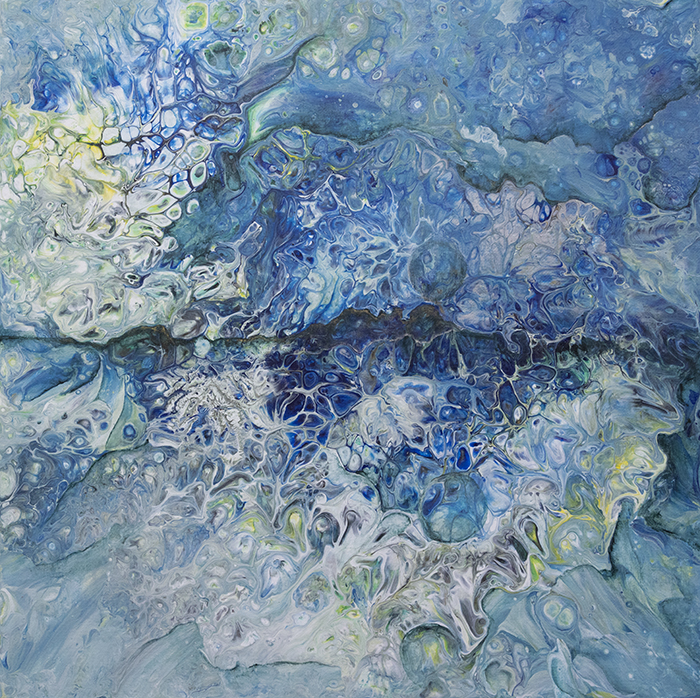
Shorelines Edge – Acrylics and watercolours on watercolour paper 55cm x 75cm
(21.65inches x 29.52inches)
Example of Shorelines Edge mounted and framed.
Iris’s new painting is available to buy as a giclee print or the original. To order a print please email Arabella at irisgracepainting@yahoo.com
Using extremely ‘high end’ scan-back camera technology and daylight balanced lighting, we are able to create an incredibly accurate and detailed digital image from Iris’s Original Paintings. Our colour management ensures consistency and guarantees the highest standards and quality of image.
With the very latest in art printing technology with fully calibrated photo-scanning, processing and printing equipment, we pay fastidious attention to colour balancing to ensure extremely accurate reproduction.
The word Giclée (“g-clay”), is derived from the French verb gicler meaning “to squirt or spray”, Giclée, is used to describe a fine art digital printing process combining pigment based inks with high quality archival quality paper (Hahnemühle German Etching, 310 gsm) to achieve Giclée prints of superior archival quality, light fastness and stability.
If you would like more details about the original painting please email Arabella at irisgracepainting@yahoo.com
Did you know that creating art can reduce stress by 75% and by simply looking and appreciating art it can be reduced by 65%. To understand the therapeutic power of art it’s important to know what happens in our brains . When we look at art or create it a feel good hormone called dopamine is released making art a therapeutic activity. The ideal pick me up with no side effects so you can unwind and recharge at the same time.
Understanding the role of Colour
Let’s think about what colour means to you, I know I can feel the impact from it and I see it happen with Iris too, but what makes that happen? Is it simply the impact of different colour tones or is it shapes, forms, the subject matter itself? I suppose each experience will be unique. We know that producing art activates the parts of the brain that controls emotions, it helps lower cortisol levels (the stress hormone) and it promotes relaxation. It can build confidence, take you away from everyday worries and give opportunities for exploration.
Healing with Art
Lately Iris has been working on a very personal piece of art for her bedroom that celebrates Luna’s life. Luna was her special therapy rabbit and she left a huge hole in our lives when she past away and so we turned to Iris’s art to heal from this loss. The painting ‘Luna’ is filled with soothing blues, purples, some green and silver and white tones. Moon like landscapes and silhouette rabbits fill the massive sheet of paper. The painting can be viewed from all angles with rabbits hidden in the landscape. It means then when she looks up at it from a lying down position in bed it becomes a playful game of spotting Luna, adding a playful element into her art. The process of painting it gave Iris great comfort and channeled her focus into something positive.
What do you feel when you look at different colours?
When we look at different colours, they can evoke a range of emotions and associations. Each one has its own unique meaning and can have a powerful impact on our mood and feelings. Let’s explore the meanings behind some of the most common colours we see in our everyday lives.
Red
Red is the first colour that humans mastered, fabricated, reproduced, and broke down into different shades. It is also one of the earliest colors used by artists during the prehistoric period.
The colour red is often associated with
passion
love
energy
danger
power
strength
Iris Grace ‘Dance to the Oboe’ painting
Red is a bold and vibrant color that can evoke feelings of excitement and intensity. In Iris’s painting ‘Dance to the Oboe’ it demonstrates just this by the way it makes you feel, it grabs your attention right from the first moment. It is an abstract painting, the waves and intricate details are full of energy and the red tones in the top section provides impact. Iris painted this after she attended a music concert where she was extremely excited and needed to release that energy when she came home.
Blue
Blue is often seen as a calming and soothing color.
It is associated with
peace
tranquility
stability
trust
loyalty
wisdom.
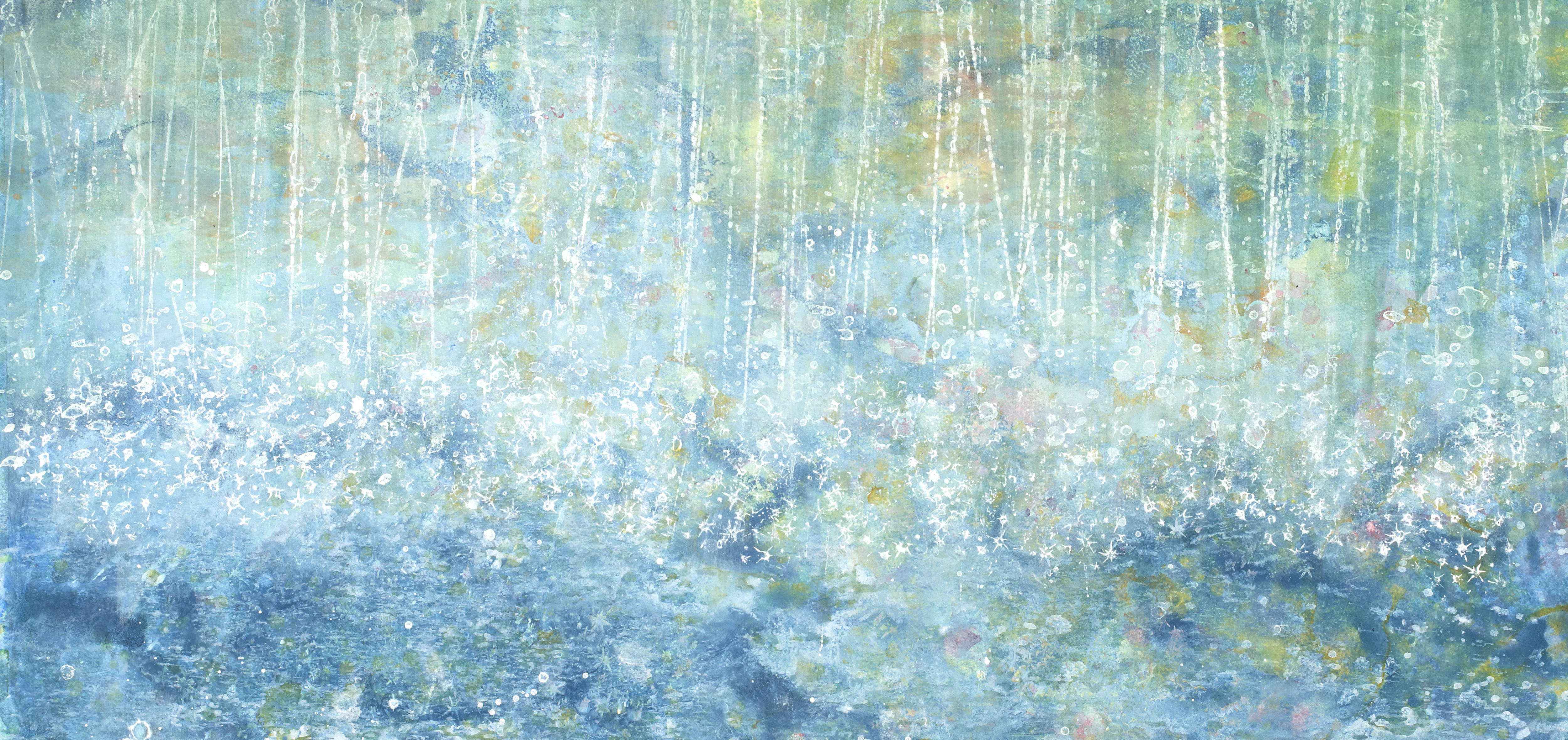
Iris’s ‘Waterfall Bounce’ painting
Blue was first produced by the ancient Egyptians for the decorative arts and it is rated as the most popular colour around the world. Many people find blue to be a comforting and relaxing color and it’s perfect for a calm interior of your home.
Green
Green is the second most favourite colour and is often associated with
nature
growth
harmony
renewal
freshness
fertility
‘Dancing in Snowflakes’
Green is a color that is often used to represent health, balance, and prosperity.
Yellow
Yellow is a bright and cheerful color that is often associated with
happiness
optimism
creativity
warmth
energy
positivity
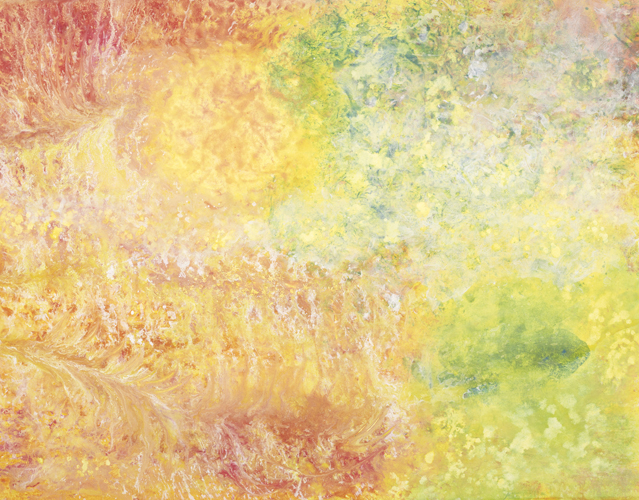
‘Trumpet’
Yellow is a color that can help lift our spirits and bring a sense of joy to our lives. It is present in some of the oldest paintings dating back to ancient Egypt and ancient Rome. Yellow can even be found as far back as prehistoric times featured in cave paintings. The yellow sun has been worshipped by countless religions with numerous sun gods wearing yellow as representations of it. Associations with sunlight has meant it is often seen as a warm colour, accounting for the connotations with happiness.
Purple
Purple is often seen as a colour of royalty, luxury, and sophistication. It can also symbolize
spirituality
creativity
mystery
‘The World Beyond Those Curtains’
Purple is a colour that is often associated with creativity and imagination by awakening our senses and promoting the calmness needed for insightful and intuitive observations. Purple creates a harmonious balance of awareness and peace.
Orange
Orange is a vibrant and energetic colour that is often associated with
enthusiasm
warmth
creativity
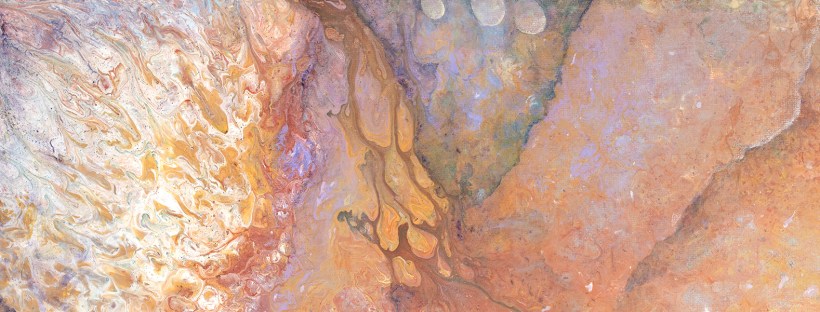
‘Equinox’
It can also symbolize excitement, joy, and adventure. Orange is a colour that can help inspire and motivate us to take action.
White
White is a colour that is often associated with
purity
innocence
simplicity
‘Water Dance’
It can also represent cleanliness, peace, and new beginnings. White is a colour that can help create a sense of calm and clarity.
These are just a few examples of the meanings behind different colours. The next time you see a certain colour, take a moment to think about how it makes you feel and what associations it brings to mind.
We are surrounded by colour all the time, but its significance in our lives goes far beyond simple aesthetic impressions. It has practical applications that help us navigate our environment and our emotions. I would like to encourage all of you to consider this while choosing your Iris Grace Print, it may help to factor in what impact you would like from the painting when it’s hanging in your home. Would you like it to inspire and invigorate? Or to soothe your senses and calm your mind? Take a look at some of her collection and see how you feel as you view each painting.
Are you looking to release stress in your body? Our dynamic duo Iris & Thula highly recommend incorporating some somatic therapy exercises into your daily routine. Somatic therapy focuses on the mind-body connection, helping you become more in tune with your physical sensations and emotions.
Here are some examples
Deep breathing
Relaxation exercises
Meditation
Dance
Art & Music
Exercise
Yoga
Vocal work
Somatic therapy offers a wide range of benefits:
1. Stress Reduction: helping to release tension and stress stored in the body, promoting relaxation and a sense of calm.
2. Improved Mind-Body Connection: By focusing on physical sensations and emotions, somatic therapy can help individuals become more in tune with their bodies and better understand the connection between physical and emotional health.
3. Increased Body Awareness: Somatic therapy can help individuals become more aware of their body’s signals and cues, allowing them to better respond to their needs and take care of themselves.
4. Enhanced Emotional Regulation: By addressing both physical and emotional aspects, somatic therapy can help individuals regulate their emotions and cope with stress more effectively.
5. Pain Management: Somatic therapy techniques, such as relaxation exercises and body awareness practices, can help individuals manage pain and improve their overall physical comfort.
Find a place where you feel happy, comfy and at home.
Surround yourself with art supplies and musical instruments.
Choose a medium that feels right for you in the moment and let your feelings guide you. Be fluid and not consumed by the end result, use the activity as a way to process, to calm, and build on your self awareness. Use your voice too, sing, hum, be free to express your creativity in any form you like.
Sensory Awareness
Play, touch, smell and fully engage with different textures and objects.
Focus on the sensations of each texture and how it makes you feel. This will enhance being in the moment and sensory connection.
Finger Count/Hold Practice
Sit or stand in a relaxed position, use your thumb to touch each finger and count as you go.
Once relaxed hold in one position and breath deeply and evenly. Focus on the sensations in your thumbs. Then move onto the next finger. Each finger corresponds to a different emotion.
Breath Focus
Sit or lie in a comfortable position.
Focus on your breath.
Feel your chest rise and fall and the sensation of the air. If your mind starts to think about other things bring it back to your breath. This will help to reduce stress and improve concentration.
Barefoot Walking
Feel the textures beneath your feet and notice the connection between your body and the earth.
Bare foot walking will improve your balance, proprioception, and body awareness. You will experience increased spacial awareness and grounding by feeling the earth.
Vocal Humming & Toning
Let the humming sound resonate from your voice (or purr), feel the vibration through your body.
Experiment with the different tones and concentrate on the sensation. What feels soothing to you?
Water Sensory
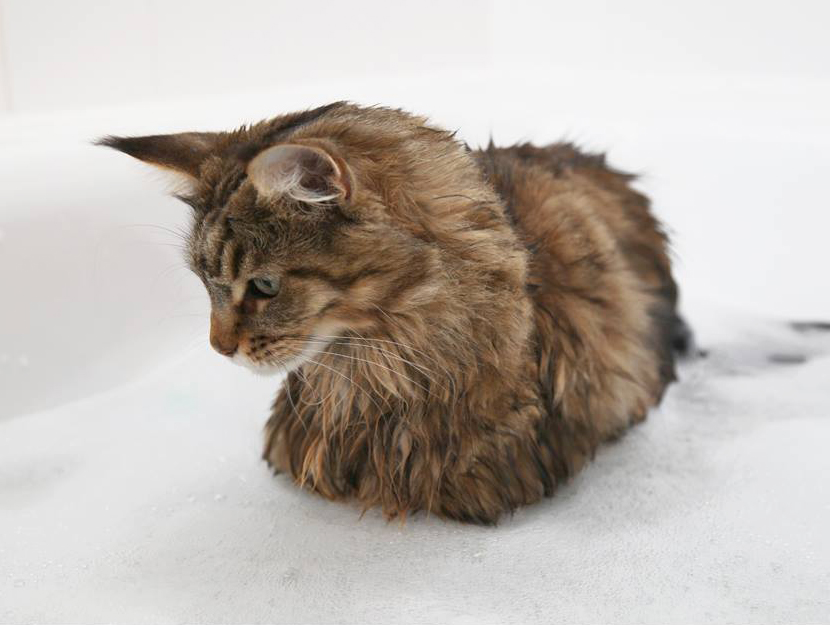
Spend some time with water, (doesn’t have to be in the bath tub) it can be at the sink. Run your hands under the water, notice the temperature and sensations.
Listen to the water and connect with the sound and the feeling of it on your skin.
Slow deep breaths, imagine the water washing away the stress.
Hug A Tree
Find a tree and wrap your arms around it, Iris suggests keeping your feet on the ground, Thula doesn’t agree.
Feel the solidness and stability of the tree. Allow the tree to support you. Feel your stess melt away and your cortisol levels dropping.
Free Form Dance & Movement
Choose some music that echoes your emotions.
Allow your body to move freely, express those feelings through your dance moves.
Follow your natural rhythm.
Swinging & Rocking
Allow yourself to swing gently, feel the motion soothe your body. Slowly rock your body back and forth, focus on the rhythmic motion and the sensations it creates.
Beautifully painted onto canvas board with acrylics and chalk 50cm x 50cm. Iris has named this piece after one of her favourite poems ‘I See The Moon’.
BUYING IRIS’S ARTWORK
To find out details about the Original painting of ‘I See The Moon’ which is available email Arabella at irisgracepainting@yahoo.com
To order a print please email Arabella at irisgracepainting@yahoo.com
Shipping
All print orders are shipped using tracked and signed delivery with Royal Mail. Iris’s Original paintings are packed in their own wooden crates and shipped via Pack & Send.
Just a quick post to ask those of you who have bought any of Iris’s products over the years if you would be willing to spare a few moments leave a google review.
‘Equinox’, painted in the week after we attended the Spring Equinox Fire Circle at the Roundhouse Haven in Stoke Albany. We hadn’t been there before or attended an event like this so I was very interested to see what it was like.
Andrea was our host. We have worked alongside her for our ‘Emotions in Motion’ workshops at The Little Explorers Activity Club and Iris was keen to hear her voice again and her drum. It was a great evening around the fire singing songs to celebrate life and the longer days. While we all sang I noticed Iris’s nervous cough that had developed last month disappeared. Her concentration and mind was focused on her breathing, the beat and voice.
Many would think it seems an odd activity for a person who struggles with speech but music somehow makes those pathways free. There wasn’t a set structure apart from the warm up where we connected to the energy points in our body, referred to as Chakras. Mostly it was about freeing your voice and feeling the sounds and moving with it.
The experience has opened up new ideas in my mind about how to use our voices and acoustic healing, how we can integrate it within our days to calm Iris’s nervous system. To me it feels like it can be something to help re-balance, to release tension and to energise.
Giclee Prints by Iris Grace
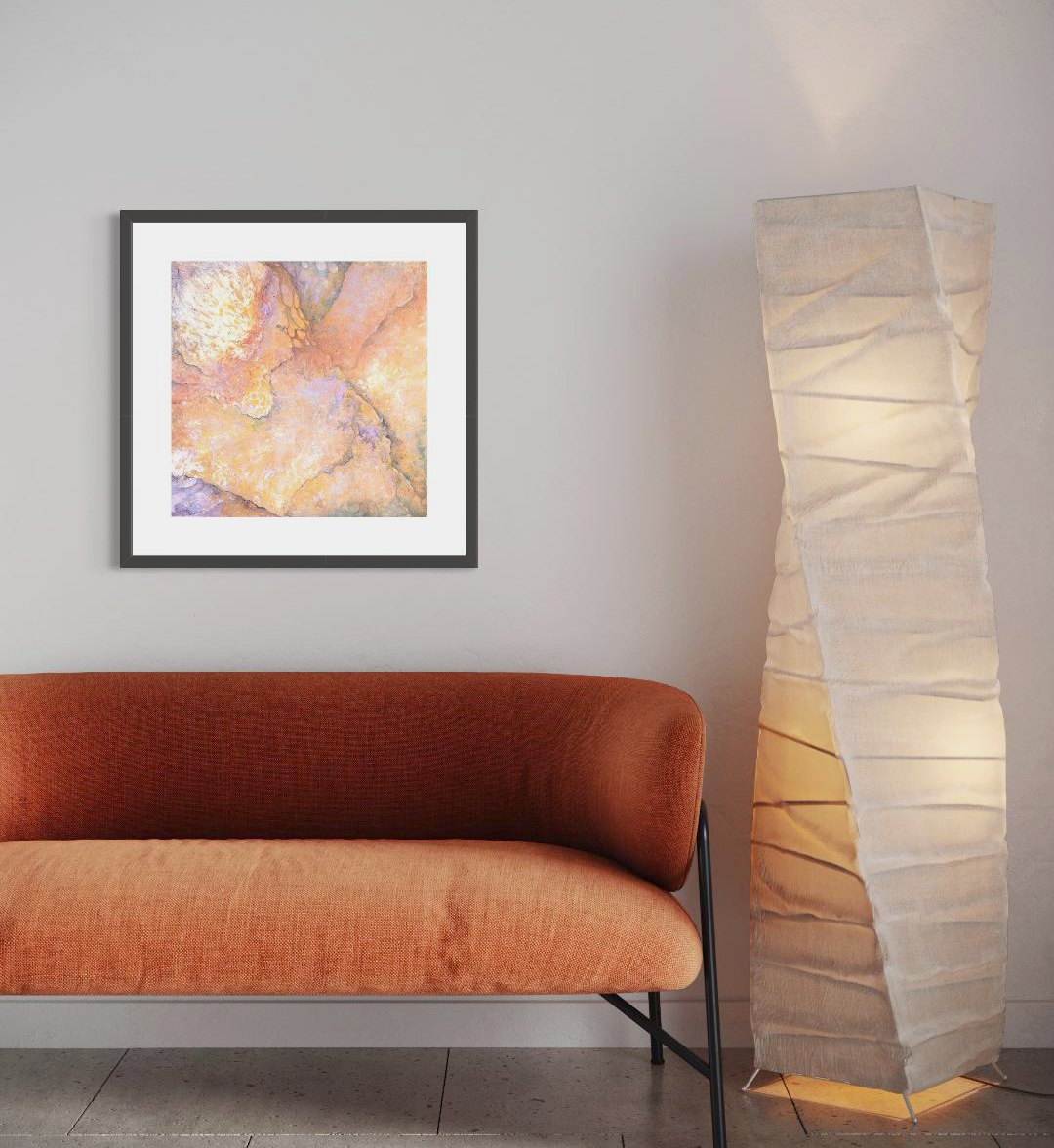
Here is an example of ‘Equinox’ mounted and framed.
We also have the Original for sale so please do get in touch if you would like info on price and delivery. Email – irisgracepainting@yahoo.com
This is a huge topic to fit in 1 blog but I’m going to give it a go. Based upon our experiences with anxiety, meltdowns and autism with Iris but I hear from speaking with others on the spectrum it will apply to many so hopefully sharing will help.
Managing Anxiety & Meltdowns on the Spectrum
It isn’t that being autistic means straight away Iris has anxiety or a behavioural disorder, but it can be a by-product of her complex set of processing differences. We can lower anxiety by understanding the causes behind it.
It is not possible to separate the autistic processing differences from Iris.
You cannot ‘cure’ her from this. It is how she functions, how her brain is wired in its own unique way. It can be overly active, acutely sensitive and have underdeveloped pathways to different areas but also overdeveloped scattered connections too. I’m not sure I will ever know exactly why but I do know there is an effective and productive way forwards. We can aid and support, live a happier healthier life.
We can reduce anxiety therefore lowering the likelihood of meltdowns & shutdowns.
I regularly assess Iris’s unique ways of perceiving and processing the world and create plans to support her through her sensory, cognitive, social, and emotional struggles.
What can cause a Meltdown/Shutdown?
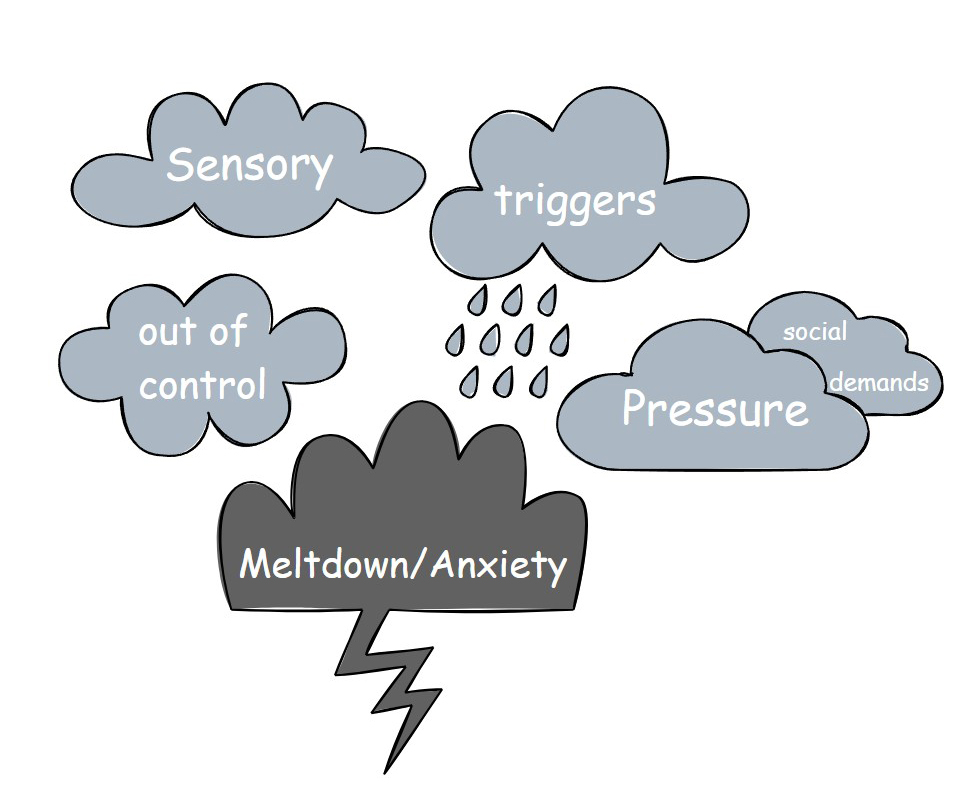
Try to imagine a meltdown or shutdown like the lightning in the storm, before this happens there is a build-up, clouds gather, there is a change in the air. Many components come together to create a storm and this is the same with a Meltdown or shutdown.
It is hardly ever one trigger, more like an ever changing, morphing set of moving clouds. We need to look at the whole picture and all of the elements – triggers. These can also be amplified when you factor in insomnia or communication difficulties. A meltdown is when the bodies stress chemicals have got to extreme levels, the “fight or flight” reaction sets in. A lightning bolt – immediate release of these chemicals. A shutdown on the other hand is like the opposite, it’s a protective mode to manage the stress chemicals getting too high. Both are signs of extreme distress and should never be looked upon as a tantrum or to be ashamed of.
What can we do to help with anxiety and Meltdowns
A few examples:
Sensory Issues
Too noisy – ear defenders or ear plugs, move to a quiet area, turn lights and electronics off
Sensitivity to light – turns lights off, sunglasses on outside or in the car.
Feelings within the body – deep pressure, massage can disperse the stress chemical build up
Smells from cooking – open windows
Cluttered space – tidy up, keep things in order and clean space
Too hot/cold – help change clothing, open windows…adjust temp
Uncomfortable clothing – try using soft cotton clothing, no labels, good fit
Out of control
Not knowing what is happening next or how long an activity will go on for – make a clear plan, break down into small stages
Try adding in more closed loop activities with a clear start and finish in one session.
Being told what to do – give choices
Needing independence – teach life skills in manageable stages
Stressed in new situations – prepare before with social stories, looking at websites, google maps…
Changes of plan – give a clear new plan to refer to
Social Demands
Social Demands and Pressure – Give time and more time. Socialising is exhausting for someone who is autistic. Reduce pressure where possible.
Triggers – observe what is triggering them and try to reduce those parts or help them manage the triggers so that it will help settle the clouds brewing.
For every person on the spectrum what helps them through their anxiety and what calms the storm in a meltdown will be different. I’m afraid its very often a case of trial and error to work it out. Start with observing what naturally works, what are they drawn to as they calm down. Create a ‘Happy Basket’ of sensory items and things that help them and you through the tough times or in the recovery stage after a meltdown. Iris’s basket includes sensory putty, a song book journal with the lyrics of all of her favourite songs, fabric that feels like Luna her rabbit, perfumed moisteriser, song list from Spotify, photo journal of activities and outings we have done. They are all items to calm, to transport Iris into a different frame of mind.
Work out if they need more clarity in the plan for the day. Maybe tasks need to be broken down into bit size chunks. Sometimes a set protocol that works when they are feeling things going in the wrong direction can help. Create an emotional support plan that you can all work from.
Environment
At times the environment needs to change, the simple act of moving Iris into another space can shift and change the mood & emotions. One of the hardest challenges I have found is realising when the environment is literally human, it’s us, it’s me. How to handle that when it’s the people around you too, your family. Our words, our body language, our speech. Without realising it we are within the clouds gathering adding to the storm.
How we can make conversations easier
So this whizz stop tour comes to and end but I hope it’s the beginning of a journey to finding solutions that make life a little easier.
For more information please have a read of our e-booklet on The Little Explorers Activity Club website.
Please share in the comments any advice, thoughts and experiences you have had with this as a person on the spectrum or a parent, carer 😊
One of the advantages I feel of discovering a love for art when you are young is that there are no boundaries, it’s all about fun, exploring textures and colour. How different materials react. As a young painter Iris isn’t set or fixed into a particular way of doing things and it is about the experience of doing that is therapeutic.
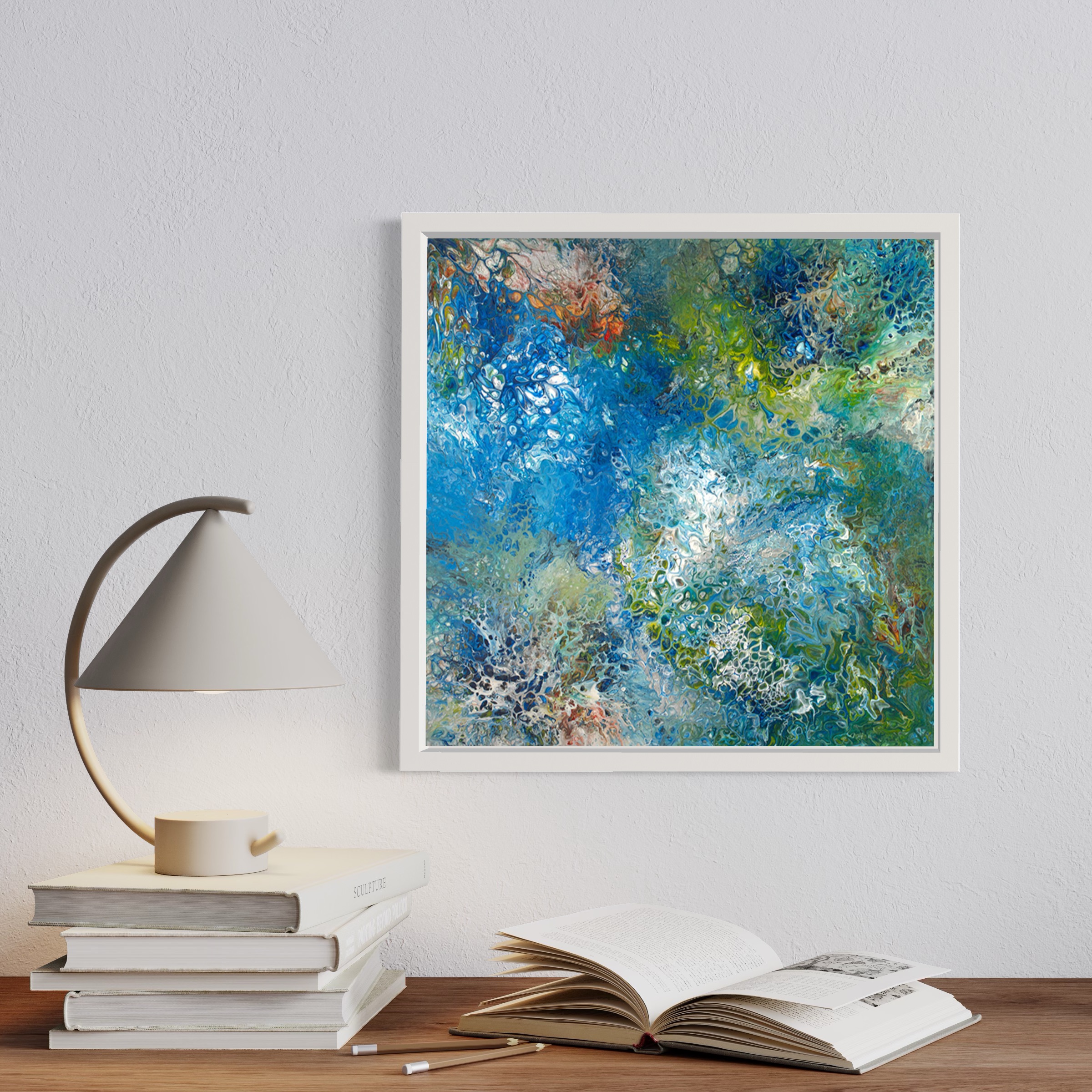
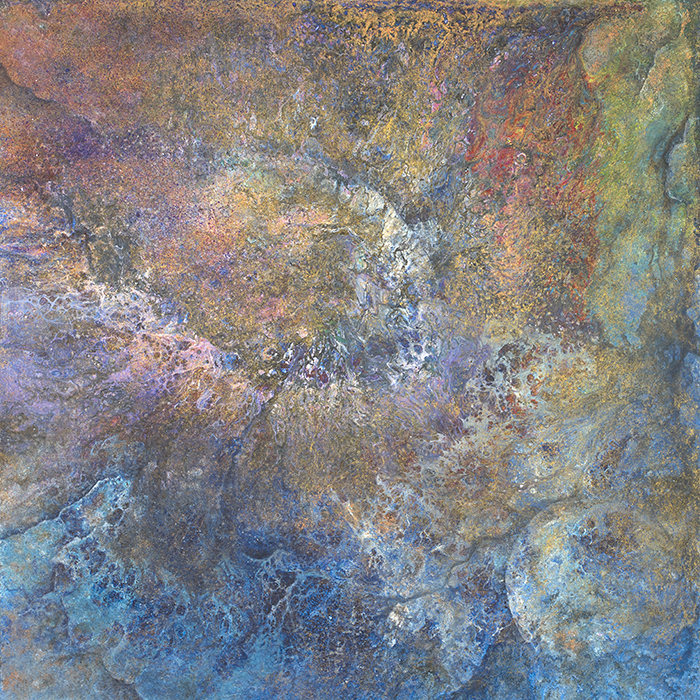
Here is her latest painting, ‘Over the mountains, over the sea’ painted onto canvas board with acrylics. 40cm x 40cm
This one reminds me of the Post-Impressionist painter Vincent van Gogh with it’s contrasting tones and dreamlike movement. I love how her artwork is developing and changing as she experiments and we see new ideas from this young painter.
To find out details about the Original painting which is available please email Arabella at irisgracepainting@yahoo.com or to see what other paintings are available click here
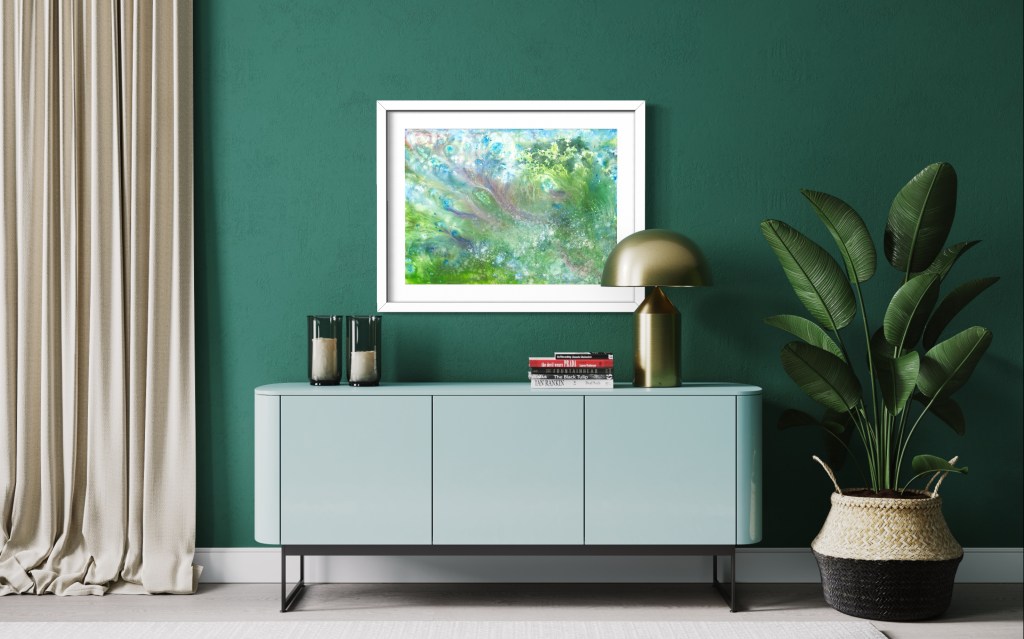
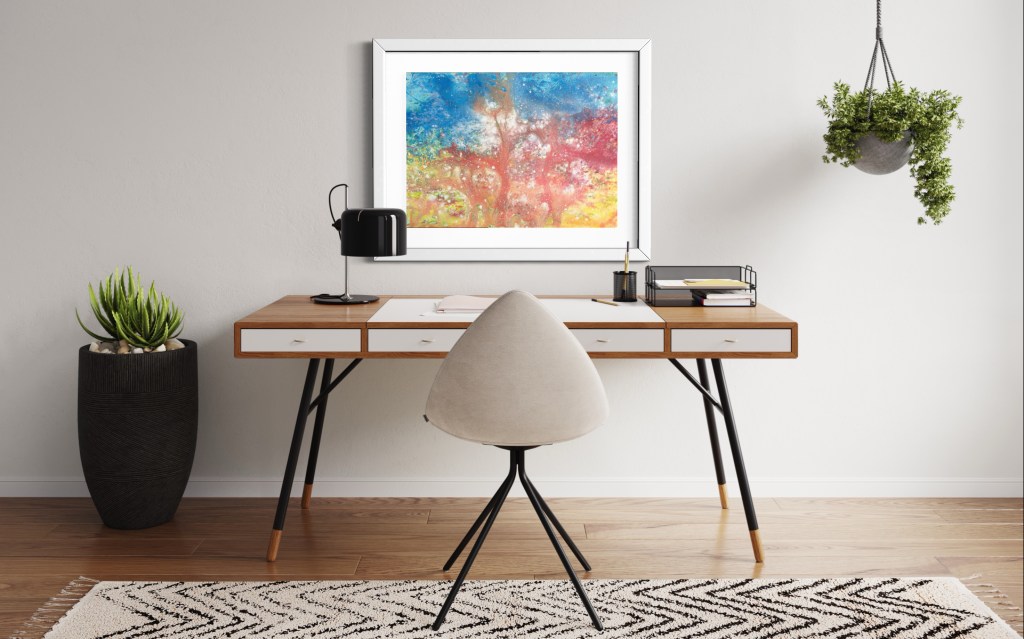
Sometimes it can be difficult to imagine what a piece of artwork will look like once it’s mounted and framed up on the wall. Would it be best positioned above a mantlepiece or your office desk? Maybe in the kitchen or living room? Iris and I have created some mock-ups for you to see, examples of her work in interiors to get your mind’s eye in the groove so you can easily start to picture her framed pieces up in your own home.
Using extremely ‘high end’ scan-back camera technology and daylight balanced lighting, we are able to create an incredibly accurate and detailed digital image from Iris’s Original Paintings.
Our colour management ensures consistency and guarantees the highest standards and quality of image. With the very latest in art printing technology with fully calibrated photo-scanning, processing and printing equipment, we pay fastidious attention to colour balancing to ensure extremely accurate reproduction.
The word Giclée (“g-clay”), is derived from the French verb gicler meaning “to squirt or spray”, Giclée, is used to describe a fine art digital printing process combining pigment based inks with high quality archival quality paper (Hahnemühle German Etching, 310 gsm) to achieve Giclée prints of superior archival quality, light fastness and stability.
Profits from the sales of her art go towards her therapies, education and future.





















 Iris Grace Painting