

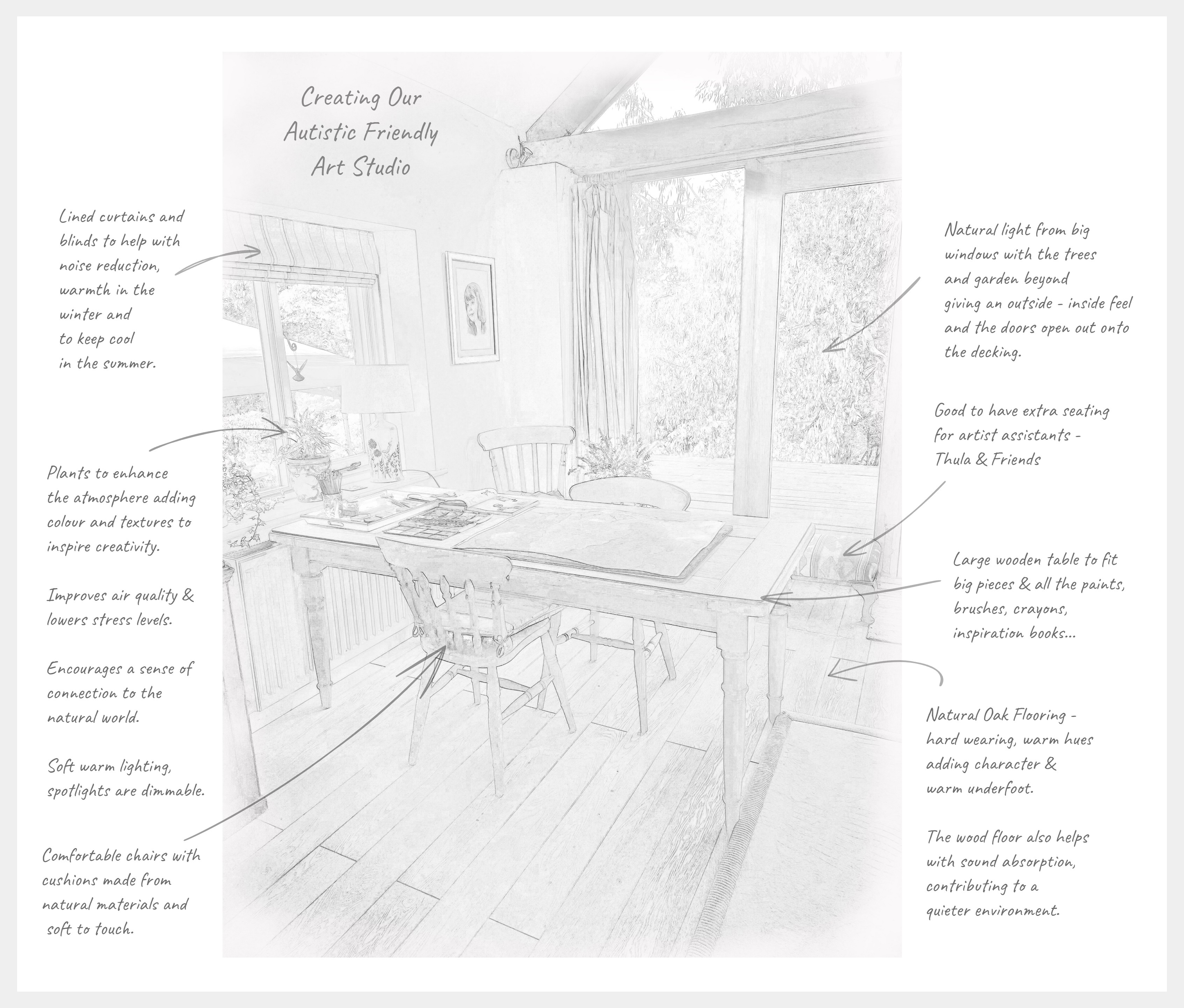
🌿 Creating The Art Studio 🍃
Lined curtains and blinds to help with noise reduction,
warmth in the winter and to keep cool
in the summer. ☀️
Plants to enhance the atmosphere adding colour and textures to inspire creativity. 🪴
Improves air quality & lowers stress levels. 😊
Encourages a sense of connection to the natural world.
Soft warm lighting, spotlights are dimmable.
Comfortable chairs with cushions made from natural materials and soft to touch.
Natural light from big windows with the trees and garden beyond, giving an outside – inside feel and the doors open out onto the decking. 🌳
Good to have extra seating for artist assistants –
Thula & Friends 🐈 🐇
Large wooden table to fit big pieces & all the paints, brushes, crayons, inspiration books… 📚🎨🖌️
Natural Oak Flooring – hard wearing, warm hues adding character & warm underfoot.
The wood floor also helps with sound absorption, contributing to a quieter environment.
What’s your ideal creative space?
Where do you feel the most comfortable? Before we start to work on our art let’s set up the environment we are working in to be the best it can be 😊 This is Iris’s but what will yours be like and what works for you now and why?
Let’s consider some points when setting up a creative space
1. Location:
– Accessibility: Choose a location that is easy to access regularly, whether it’s in your home or a rented space. Consider noise levels, especially if you’re easily distracted.
– Inspiration: Being close to nature or interesting urban environments can provide additional stimulation.
2. Layout:
– Zoning: Create areas for specific tasks—drawing, painting, mixed media, and digital art. Each zone can be tailored to the needs of that medium.
– Movement: Ensure that pathways are clear and allow for easy movement between different work areas.
3. Storage:
– Modular Solutions: Use modular shelving units that can be adjusted as your collection of materials grows.
– Visible Organization: Transparent bins or labeled storage can make it easier to find what you need quickly and encourages you to keep your space tidy.
4. Lighting:
– Task Lighting: Use adjustable desk lamps focused on work areas for detailed tasks, while softer ambient lighting can create a relaxed atmosphere. Make the most our of any natural light available.
– Color-Temperature: Select bulbs that mimic daylight (around 5000K) to ensure accurate color representation when working on art.
5. Work Surface:
– Material Choice: Opt for surfaces that can be easily cleaned.
– Height Consideration: Having adjustable height surfaces can help accommodate different projects, whether you’re standing or sitting.
6. Tools and Materials:
– Inventory System: Keep an inventory list of your materials to manage stock effectively, replacing items before they run out.
– Segregation: Separate basic supplies (brushes, paints, pencils) from specialty items to streamline your workflow.
7. Comfort:
– Chair Selection: Invest in chairs that you love, especially if you’re seated for long hours.
– Temperature Control: Have fans or heating available to maintain a comfortable working temperature year-round.
8. Inspiration:
– Vision Boards: Create mood boards or inspirational walls with colors, images, and quotes that resonate with your artistic style.
– Samples: Display your past works to motivate yourself and track your artistic journey.
9. Ventilation:
– Air Quality: Install exhaust fans or use air purifiers to maintain air quality, especially when working with solvents or sprays.
– Fresh Air: Whenever possible, open windows during work sessions to allow for natural ventilation.
10. Technology:
– Art Software: Consider investing in tablets or software for digital art, design, and planning.
– Documenting Progress: Use cameras or smartphones to document your work and share your process on social media.
11. Sound:
– Acoustic Treatments: If sound distraction is an issue, consider adding rugs and other soft furnishings to absorb the sound along with natural materials.
– Sound Control: Create playlists or find streaming services that provide the type of music or ambiance that inspires you while working.
12. Access to Nature:
– Natural Elements: Incorporate plants to enhance the atmosphere. Studies show that greenery can boost creativity and reduce stress.
– Outdoor Space: If possible, connect your studio to an outdoor area where you can work, drawing inspiration from your surroundings.
If we pay attention to these aspects, our art studios can become a sanctuary for creativity and an effective place for artistic exploration and productivity. Happy creating everyone !
 Iris Grace Painting